

The most common complaint in open-plan offices isn't about the furniture — it's about the noise. But noise is almost always a furniture problem in disguise. If your team is struggling to concentrate, the issue usually isn't the people; it's that the furniture specification never properly accounted for focused work. By the end of this article, you'll understand how to audit your actual work mix, what quiet and collaborative furniture should each deliver, and the proportions that most offices get badly wrong.
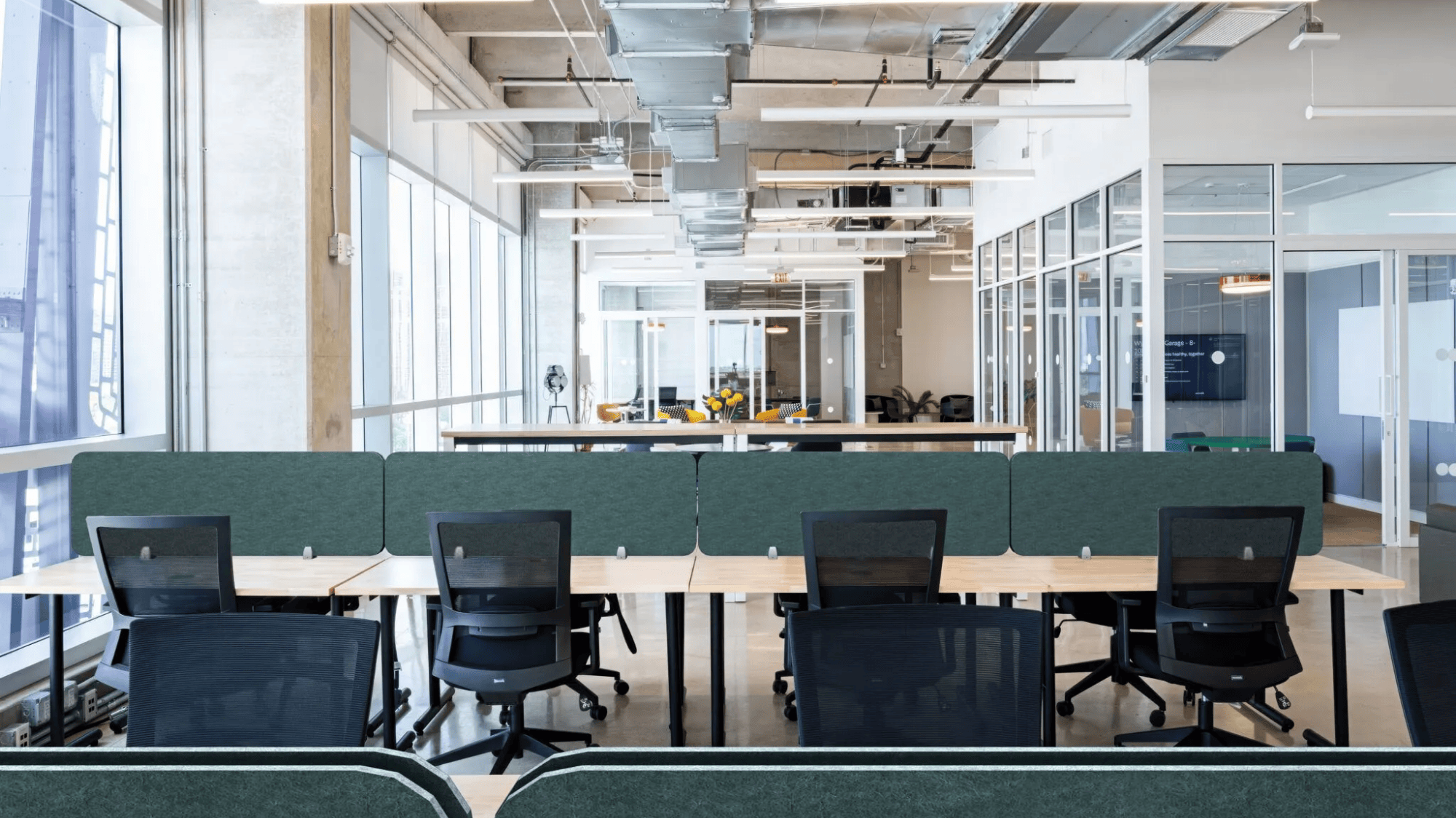
Why open-plan offices fail at both focus and collaboration
Open-plan design was built around one idea: remove the walls and collaboration follows. What wasn't accounted for was the focused work that also has to happen — writing, analysis, coding, detailed thinking — and the acoustic disruption an open environment creates for anyone trying to do it.
The result in most offices is a space optimised for neither. Too noisy for concentration. Too spread out and furniture-poor for effective spontaneous collaboration. People put on headphones to block out colleagues they were supposed to be working with, and book meeting rooms for conversations that should happen informally at a desk.
The furniture created the problem. The right furniture specification fixes it.
Understand your actual work mix before specifying anything
The right balance of quiet to collaborative furniture isn't the same for every organisation. A legal firm where fee earners spend most of their day in document-intensive, confidential work needs a very different specification to a creative agency built around constant team iteration. A sales floor needs something different again.
Before specifying a single piece of furniture, map the real working patterns across the organisation. Ask: of total working time, what proportion is individual focused work, what proportion is informal or spontaneous collaboration, what proportion is structured team work, and what proportion is calls or video meetings?
Most organisations, when they do this honestly, find that focused individual work accounts for 35–50% of their working day. That number should directly inform how much of the furniture estate supports that mode. In most offices it doesn't — which is exactly why the noise problem persists.
What quiet workspace furniture actually needs to do
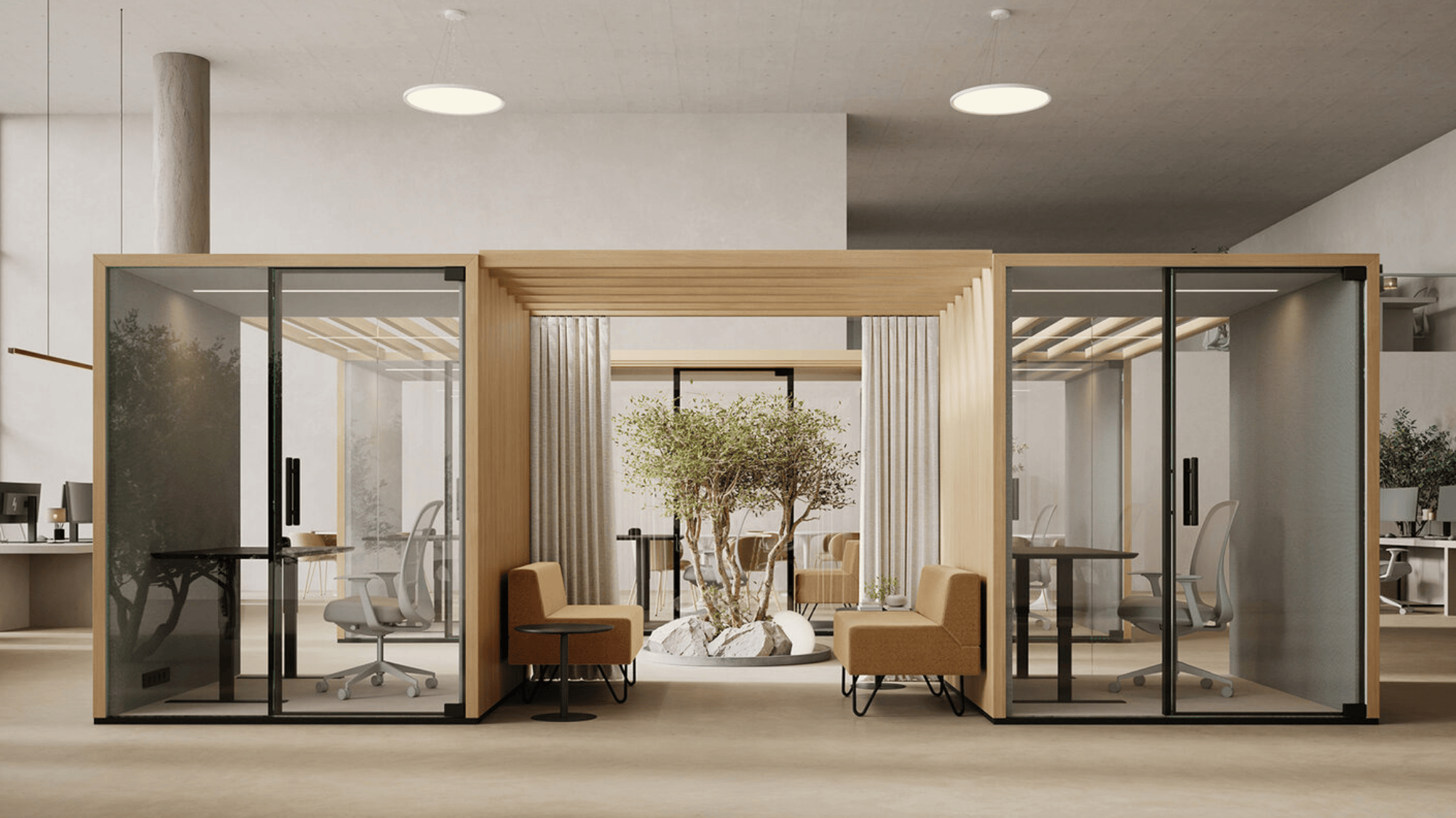
Quiet furniture has three jobs: reduce incoming noise, provide enough visual separation to limit distraction, and signal clearly to others that the person in the space isn't available for interruption. Most offices that claim to have quiet zones deliver on one of these, not all three.
The product range that achieves all three:
- Acoustic office pods — fully or largely enclosed units that provide near-private acoustic environments. Suitable for extended focused work, confidential calls, and video meetings. Quality pods achieve NRC (Noise Reduction Coefficient) ratings of 0.7–0.9, absorbing 70–90% of sound striking their surfaces.
- High-back wing chairs and individual focus booths — a lighter degree of acoustic and visual separation, suitable for shorter periods of concentrated work within an open area.
- Acoustic desk screens and workstation dividers — these build quiet workspace properties into the primary workstation rather than requiring people to move to a dedicated zone.
One honest caveat: acoustic furniture carries a cost premium. A quality acoustic pod costs between £3,000 and £8,000 depending on size and specification. That number needs to be in the budget from the start, not discovered halfway through the project
What collaborative furniture actually needs to do
Collaborative furniture is the category most often misspecified — because the assumption that collaboration means soft seating, bright colours, and an informal atmosphere has produced a generation of breakout spaces that teams quietly avoid.
Effective collaborative furniture starts from understanding what type of collaboration is actually happening. There are at least three distinct modes, each needing different furniture:
- Informal and spontaneous — two or three colleagues working through a problem quickly. The most valuable furniture here is often the simplest: a pair of chairs near a work area and a surface for a laptop. The barrier to this kind of collaboration is usually proximity and an available surface, not the absence of a designed collaborative space.
- Structured team work — a group working together for an hour or more on a defined task. This needs a table sized for the group, seating comfortable enough for the duration, access to power, and enough acoustic separation from the surrounding environment.
- Visual collaboration — working from a shared screen, whiteboard, or reference materials. This needs clear sightlines, appropriate surface heights, and usually a display or writing surface integrated into the furniture arrangement.
A breakout sofa doesn't serve any of these particularly well. Specify for the collaboration type, not the collaboration aesthetic.
Acoustic performance matters in collaborative zones too
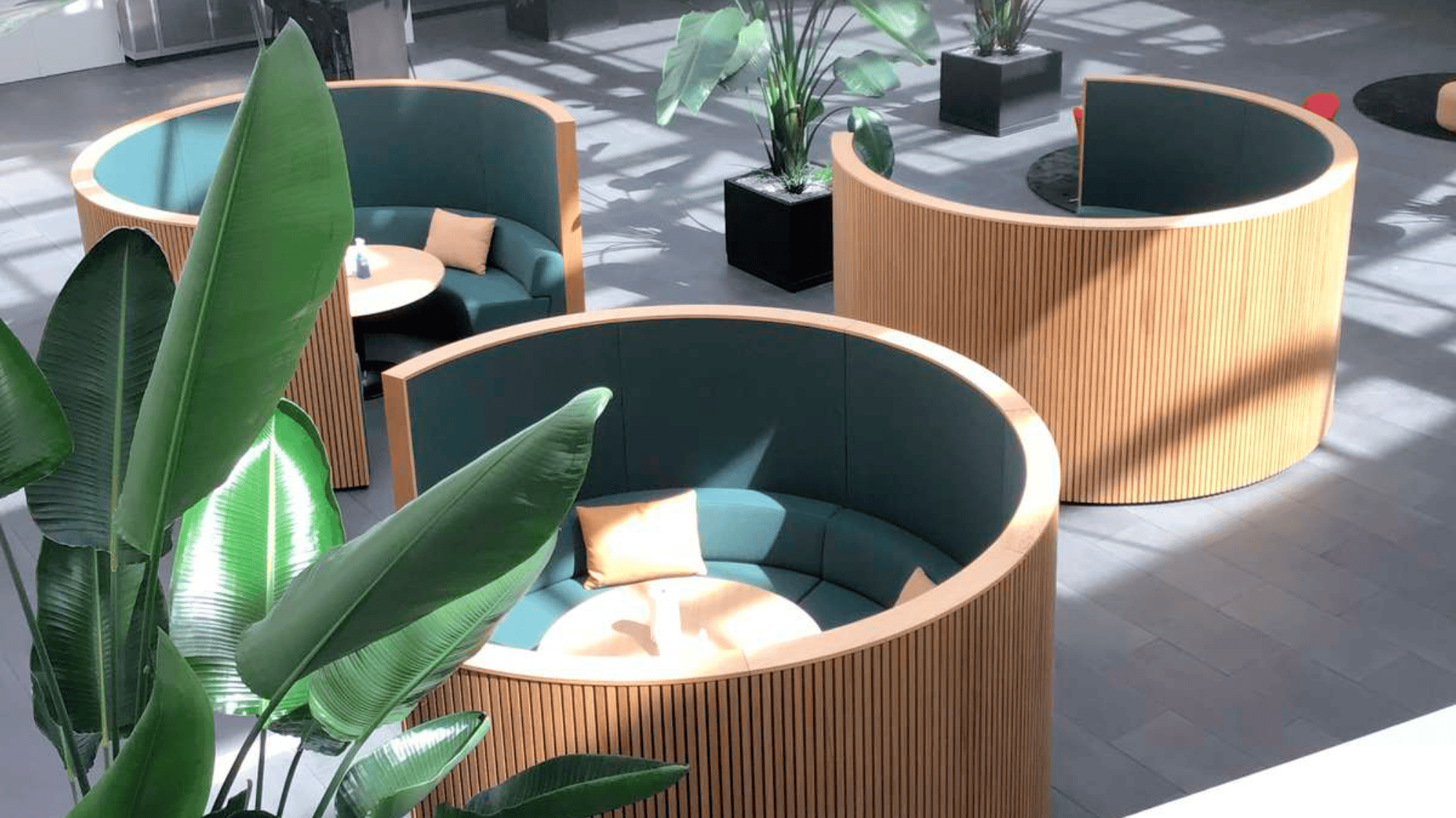
A common mistake: acoustic furniture gets concentrated in quiet zones while collaborative areas are left acoustically open. This creates two problems at once. The collaborative zone is harder to work in because it receives ambient noise from the surrounding floor. And the surrounding floor is harder to concentrate in because the collaborative zone is generating noise outward.
Acoustic treatment in collaborative furniture — booth seating with upholstered backs and side panels, collaborative tables with acoustic screen surrounds, soft furnishing surfaces throughout breakout areas — reduces the acoustic footprint of group work. It makes the zone more effective for the people in it and significantly less disruptive for colleagues nearby.
Specify acoustic performance across the full furniture mix, not only in products explicitly labelled as acoustic.
Zone your floorplate through furniture, not construction
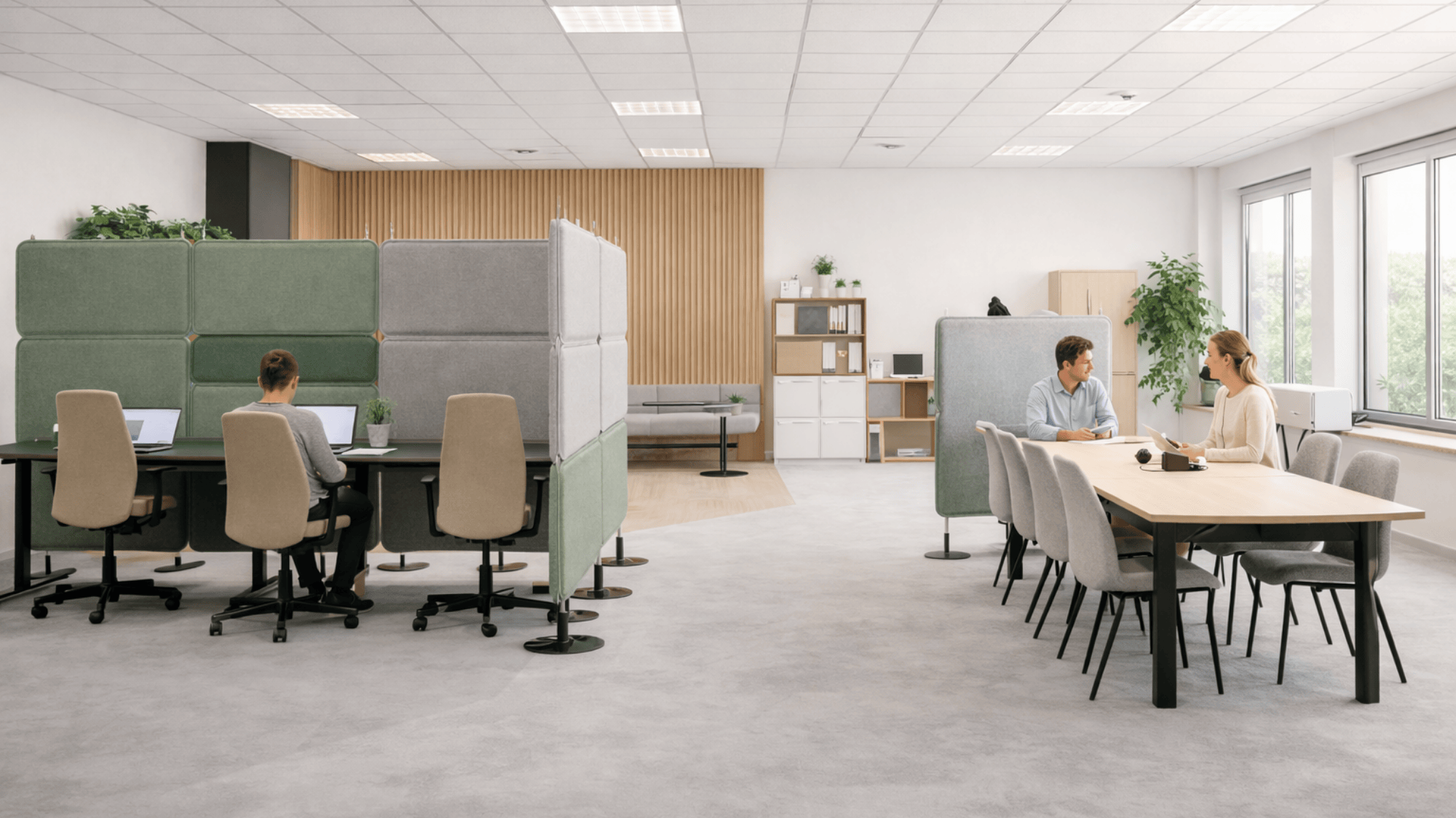
Furniture zoning creates clear spatial definition and communicates the purpose of each area without a sign. A cluster of acoustic pods and high-back focus seating, separated by freestanding acoustic screens from a zone of collaborative tables and booth seating, is immediately legible to anyone navigating the space. The character of the furniture does the communicating.
This approach also gives you something a constructed quiet room doesn't: flexibility. Furniture can be reconfigured as headcounts change, teams reorganise, or the balance of work shifts. A built quiet room is fixed. A furniture-zoned quiet area is not.
Getting the proportions right
If focused individual work accounts for 40% of your organisation's working time, roughly 40% of your furniture estate should actively support that mode. Most open-plan offices run at 10–15% quiet furniture provision. That gap is why the headphones go on.
The same logic applies in reverse: if your teams rarely do extended structured collaboration, a large investment in team tables and collaborative booths will sit underused while people book meeting rooms for two-person conversations those spaces were designed to accommodate.
Map the work. Match the furniture to the map. Adjust from there.
Start with the brief, not the product range
Getting the balance between quiet and collaborative furniture right isn't complicated — but it does require doing the analysis before opening a catalogue. Understand the working patterns first. Specify the furniture second. The offices that get it right aren't the ones with the biggest budgets; they're the ones where someone asked the right questions at the start.
If you're reviewing your office furniture and want an honest assessment of where your current specification is falling short, get in touch with the Agilita team. Tell us your headcount, your floor size, and the biggest frustrations your team raises about the space, and we'll give you a straightforward view of what's likely causing them — no obligation.